
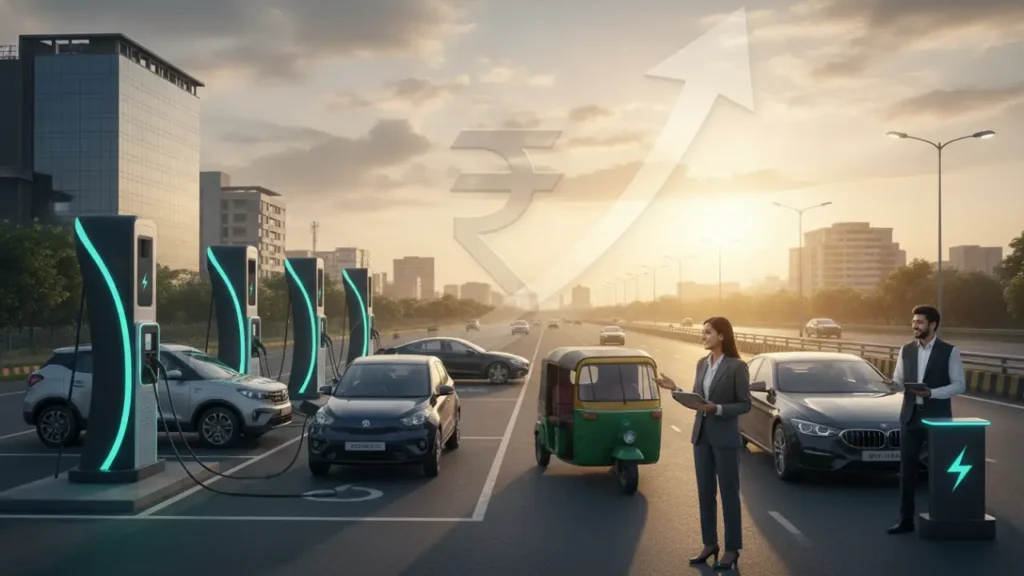
Starting an EV charging station franchise in India is rapidly becoming one of the most lucrative and future-proof business opportunities of the decade. As the country shifts aggressively from internal combustion engine (ICE) vehicles to electric vehicles (EVs), the demand for robust charging infrastructure has skyrocketed. The Indian government has set an ambitious target of achieving 30% electric vehicle penetration by 2030, which translates to millions of EVs hitting the roads. However, there is a massive gap between the number of EVs and available public charging stations. This gap presents a golden opportunity for entrepreneurs and investors. By partnering with established industry players through a franchise model, you can bypass the steep learning curve of technology and software development, and jump straight into an operational, revenue-generating enterprise. This comprehensive guide will walk you through the costs, top franchise opportunities, infrastructure requirements, and profitability of launching your own electric vehicle charging business in India.
- The Booming Market for EV Charging Infrastructure
- Government Subsidies and Incentives
- The Shift in Consumer Behavior
- Top Companies Offering EV Charging Station Franchises
- Tata Power EZ Charge
- Kazam and ChargeZone
- Detailed Cost and Investment Breakdown
- Infrastructure and Civil Works
- Working Capital and Operational Costs
- Legal Requirements, Land, and Profitability Analysis
- Navigating the Permitting Process
- Calculating ROI and Break-Even
- Conclusion
The Booming Market for EV Charging Infrastructure
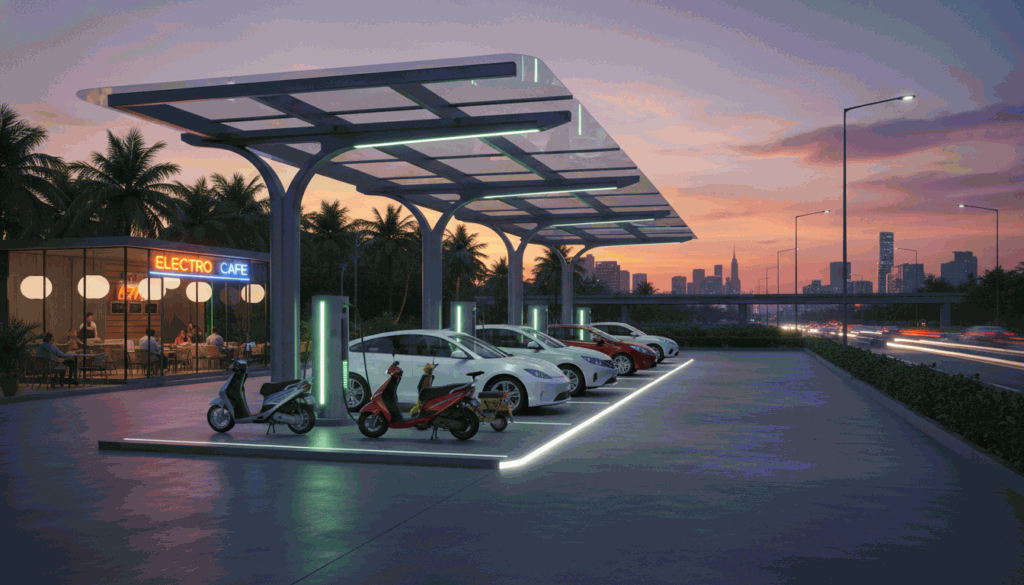
The electric vehicle revolution in India is no longer a distant dream; it is happening right now on our city streets and highways. With soaring fuel prices and increasing environmental awareness, Indian consumers are pivoting toward cleaner transportation alternatives. However, the biggest hurdle to mass adoption remains range anxiety—the fear of a battery dying before reaching a charging point. To combat this, massive public and private investments are pouring into EV infrastructure.For a business owner, this means guaranteed footfall and recurring revenue.
Government initiatives like the FAME II (Faster Adoption and Manufacturing of Hybrid and Electric Vehicles) scheme are providing subsidies that make setting up charging stations highly attractive. Furthermore, the Ministry of Power has de-licensed the EV charging business, meaning anyone can set up a public charging station provided they meet technical and safety standards. Opting for an EV charging station franchise in India mitigates the risk of starting from scratch, giving you access to pre-approved hardware, centralized management software (CMS), and a recognizable brand name that EV drivers already trust.
Projected EV Growth in India by Vehicle Category
| Vehicle Category | Current Market Share (Est.) | Projected 2030 Penetration Target |
|---|---|---|
| Electric 2-Wheelers | 5 – 7% | 80% |
| Electric 3-Wheelers | 40 – 50% | 80% |
| Commercial Fleet (4-Wheelers) | 2 – 4% | 70% |
| Private 4-Wheelers | 1 – 2% | 30% |
| Electric Buses | 4 – 5% | 40% |
| Heavy Duty Commercial Trucks | < 1% | 10 – 15% |
Government Subsidies and Incentives
State governments across India are rolling out individual EV policies that offer capital subsidies on EV Supply Equipment (EVSE). Some states offer up to 25% reimbursement on the cost of fast-charging hardware. Additionally, electricity distribution companies (DISCOMs) are providing special, lower tariffs for EV charging businesses, significantly improving the profit margins for franchise owners.
The Shift in Consumer Behavior
Consumers are rapidly adopting two-wheelers and three-wheelers for daily commutes and last-mile delivery, alongside a steady increase in electric four-wheelers. Because EVs take longer to “refuel” than traditional cars, modern charging stations are being developed alongside cafes, retail outlets, and rest stops. This captive audience provides franchise owners with an opportunity to build secondary revenue streams.
Market Insight
Pro-Tip: Capitalize on Fleet Operations
Don’t just target individual car owners. Partnering with local logistics companies, electric cab fleets (like BluSmart), and e-commerce delivery partners can guarantee high daily utilization rates for your EV charging station franchise.
Top Companies Offering EV Charging Station Franchises
Choosing the right partner is the most critical decision you will make when starting your EV charging station franchise in India. The franchisor provides the hardware (chargers), the software application that users download to pay, and the backend maintenance support. The Indian market features a mix of massive energy conglomerates and agile tech startups, each offering distinct franchise models.Some brands operate on a CAPEX (Capital Expenditure) model where you buy the equipment outright and keep maximum profits, while others operate on an OPEX (Operational Expenditure) or Revenue Share model where they invest in the hardware, and you provide the commercial space and electricity setup. Evaluating the support, warranty periods, brand visibility, and user-friendliness of the franchisor’s mobile app is essential for long-term success.
Top EV Franchise Brands and Investment Models
| Franchise Brand | Primary Charger Focus | Estimated Initial Investment (INR) |
|---|---|---|
| Tata Power EZ Charge | DC Fast & AC Slow Chargers | 10 Lakhs – 40 Lakhs |
| Kazam EV | IoT Enabled AC Chargers | 50,000 – 3 Lakhs |
| ChargeZone | High-Speed DC (Buses/Cars) | 15 Lakhs – 50 Lakhs |
| Volttic EV | Commercial & Workplace | 5 Lakhs – 25 Lakhs |
| Statiq | Highway & Destination Chargers | 8 Lakhs – 30 Lakhs |
| Ather Grid | 2-Wheeler Fast Charging | Variable (Often Partner Hosted) |
Tata Power EZ Charge
Tata Power is an undisputed leader in India’s EV charging sector. They boast a massive network of over 3,000 public chargers across the country. A Tata Power franchise benefits from immense brand trust. They offer comprehensive turnkey solutions, from site evaluation and installation to 24/7 backend support, making it an ideal choice for investors seeking a reliable and recognizable partner.
Kazam and ChargeZone
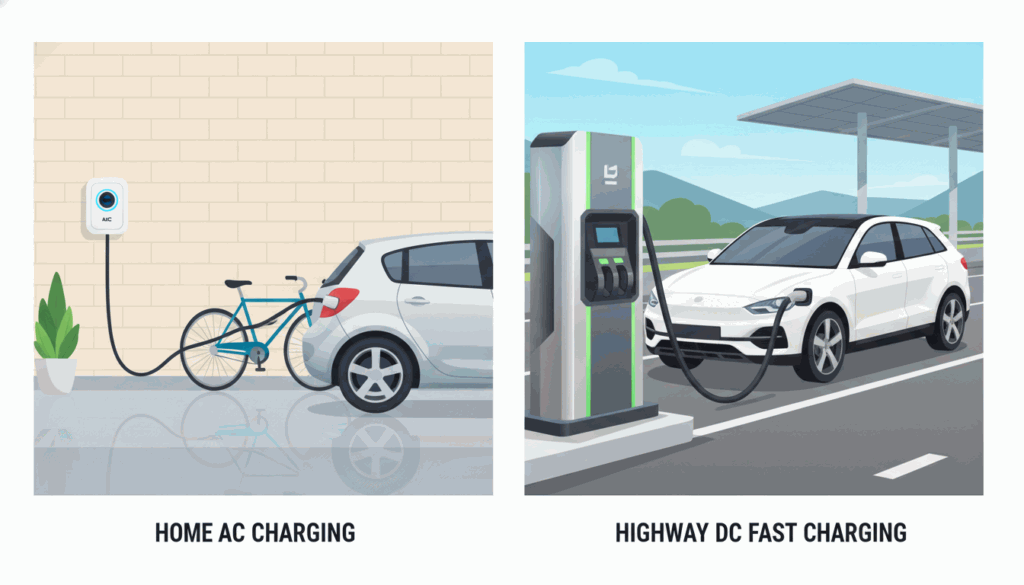
Startups like Kazam focus heavily on smart, affordable AC charging solutions perfect for residential complexes, malls, and small parking lots. ChargeZone, on the other hand, specializes in high-speed DC fast chargers suitable for highways and commercial bus fleets. Choosing between them depends on your budget and the physical location of your proposed site.
Important Warning
Watch Out for Hidden Software Fees
When evaluating a franchise agreement, carefully review the Central Management System (CMS) charges. Some franchisors charge a hefty monthly software maintenance fee or take a larger cut of the per-unit electricity sold, which can severely impact your net margins.
Detailed Cost and Investment Breakdown
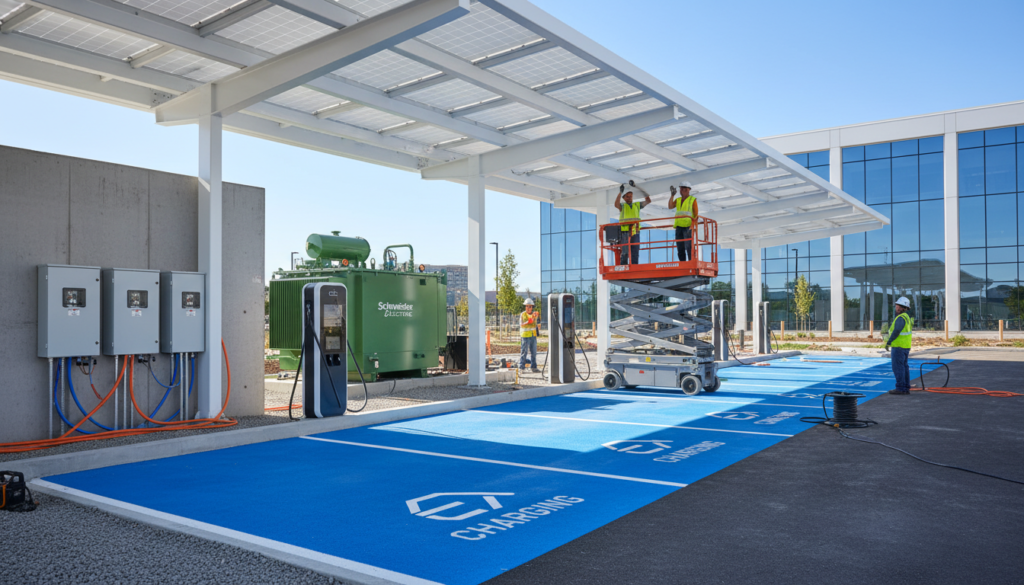
To successfully launch an EV charging station franchise in India, you need a clear understanding of the capital required. The costs can be broadly divided into hardware, electrical infrastructure, civil works, and land leasing. Unlike traditional fuel stations that require massive underground storage tanks and stringent environmental clearances, EV stations have a cleaner setup but require substantial electrical grid integration.
Hardware is often the largest expense. A standard Level 2 AC charger might cost anywhere from ₹30,000 to ₹1,00,000, while a robust 50kW or 60kW DC Fast Charger can set you back ₹8,00,000 to ₹15,00,000. Beyond the charger itself, securing a high-tension (HT) electrical connection from your local DISCOM and installing a dedicated transformer is a significant fixed cost. Proper budgeting for these elements ensures your business doesn’t run out of capital before it even opens.
Estimated Capital Expenditure Breakdown (Standard 2 DC / 2 AC Setup)
| Expense Category | Estimated Cost (INR) | Frequency |
|---|---|---|
| DC Fast Chargers (e.g., Two 50kW units) | 16,00,000 – 24,00,000 | One-Time Setup |
| AC Chargers (e.g., Two 22kW units) | 1,50,000 – 3,00,000 | One-Time Setup |
| New Grid Connection & Transformer | 5,00,000 – 10,00,000 | One-Time Setup |
| Civil Works, Canopy & Lighting | 3,00,000 – 6,00,000 | One-Time Setup |
| Land Lease Deposit (Commercial space) | 2,00,000 – 5,00,000 | Refundable Deposit |
| Software (CMS) & Integration Fees | 20,000 – 50,000 | Annual/Monthly |
Infrastructure and Civil Works
A premium charging station needs to look appealing and feel safe. Civil works include leveling the ground, laying proper drainage, constructing weather-proof canopies to protect the charging equipment and vehicles, and installing bright LED lighting and CCTV cameras for security. These elements are critical for customer retention.
Working Capital and Operational Costs
While waiting for your EV charging station franchise in India to hit its break-even point, you must maintain enough working capital. Monthly operational costs include electricity bills (which will be substantial), internet connectivity for the chargers, security personnel, general maintenance, and franchise royalties or CMS subscriptions.
Financial Tip
Optimize Your Transformer Capacity
Do not under-size your transformer. If you plan to expand from 2 chargers to 6 chargers in the future, install a higher KVA transformer on day one. Upgrading a transformer later is far more expensive and requires halting business operations.
Legal Requirements, Land, and Profitability Analysis
Before breaking ground, you must navigate the legal landscape. While the Ministry of Power has simplified the process, running an EV charging station franchise in India still requires adherence to strict safety protocols set by the Central Electricity Authority (CEA). The most crucial step is obtaining the Chief Electrical Inspector to Government (CEIG) approval, which verifies that your high-voltage equipment is safely installed and properly grounded.
Equally important is land selection. The success of this business model heavily relies on location. Ideal locations are highway food courts, shopping malls, corporate tech parks, and busy urban centers. Once the station is live, profitability comes down to utilization rates. You earn the margin between the commercial electricity tariff you pay the DISCOM and the per-unit rate you charge the customer. Supplementing this core revenue with advertising screens, a small convenience store, or parking fees can drastically reduce your ROI timeline.
Licensing and Legal Compliance Checklist
| License / Permit Required | Issuing Authority | Estimated Processing Time |
|---|---|---|
| State Nodal Agency (SNA) Registration | State Renewable Energy Dept. | 2 – 4 Weeks |
| High-Tension Power Load Sanction | Local Electricity Board (DISCOM) | 4 – 8 Weeks |
| CEIG Safety Inspection Certificate | Chief Electrical Inspector | 2 – 3 Weeks |
| Fire Safety NOC | Local Fire Department | 2 – 4 Weeks |
| Trade License | Municipal Corporation | 1 – 2 Weeks |
| Commercial Land Conversion (If needed) | Revenue Department | 4 – 12 Weeks |
Navigating the Permitting Process
You will need a No Objection Certificate (NOC) from the local fire department and municipal corporation. If you are leasing land, a clear commercial lease agreement is mandatory for the electricity board to sanction your high-tension load. Partnering with a reputable franchisor often smooths this process, as they provide standardized safety blueprints required by local authorities.
Calculating ROI and Break-Even
The break-even timeline for an EV charging station typically ranges from 2.5 to 4 years, depending on utilization. If your station operates at 30% utilization (roughly 7-8 hours of continuous charging per day), the cash flow becomes highly positive. Strategic pricing during peak and off-peak hours can also optimize your revenue.
Success Metric
The Importance of ‘Dwell Time’
Dwell time refers to how long a customer stays while their car charges (usually 30-60 minutes). By providing free Wi-Fi, clean restrooms, and vending machines, you can monetize this dwell time, adding up to 20% to your total monthly revenue.
Conclusion
To summarize, investing in an EV charging station franchise in India is a forward-thinking move that aligns with global sustainability goals and massive domestic market demand. While the initial capital expenditure for hardware and electrical infrastructure can be high, the operational costs are relatively low compared to traditional retail businesses. By selecting the right franchise partner, securing a high-traffic location, and adhering to strict safety and licensing norms, entrepreneurs can build a highly profitable, scalable business. As India accelerates toward an electric future, those who lay the groundwork today will become the energy magnates of tomorrow.
Frequently Asked Questions
How much does it cost to start an EV charging station franchise in India?
The cost varies significantly based on the type of chargers. A basic AC charging setup can start as low as ₹1 Lakh to ₹3 Lakhs. However, a fully equipped commercial fast-charging station with DC chargers, transformers, and infrastructure typically requires an investment between ₹15 Lakhs and ₹40 Lakhs.
Is an EV charging station business profitable?
Yes, it is highly profitable if located strategically. Profitability relies on utilization rates. An EV charging station running at 25% to 30% daily utilization can expect to break even within 3 to 4 years, with margins increasing as EV adoption grows.
Do I need a special license to set up an EV charging station?
The Ministry of Power has de-licensed the EV charging business, meaning you do not need a specific ‘license’ to sell electricity for EV charging. However, you do need safety clearances like the CEIG certificate, Fire NOC, and municipal approvals.
Which company offers the best EV franchise in India?
Tata Power EZ Charge is widely considered the industry leader due to its vast network and reliability. Other excellent options include ChargeZone for highway fast-charging, and Kazam or Volttic for affordable, destination-based charging solutions.
How much space is required for an EV charging station?
A minimum of 100 to 200 square feet is required for a basic two-car charging setup. However, a commercial hub with multiple fast chargers, transformers, and driving clearance requires at least 1,000 to 1,500 square feet of easily accessible commercial space.