
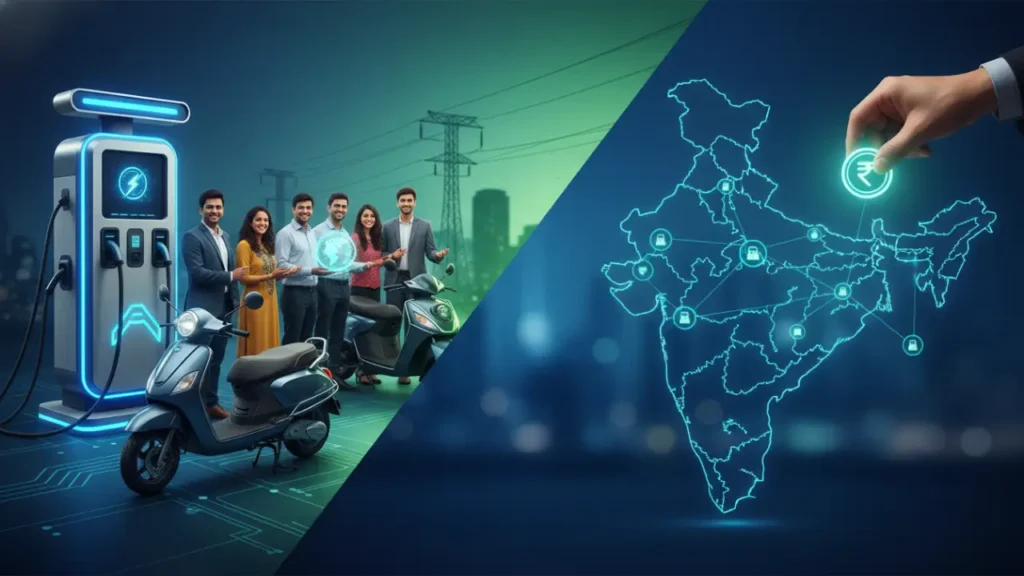
Starting an EV charging franchise in India is rapidly becoming one of the most highly sought-after and future-proof business opportunities of the decade. With the Indian government actively pushing for electric mobility through aggressive subsidies, infrastructure development, and favorable policies, the transition from internal combustion engines to electric vehicles (EVs) is no longer a distant dream—it is an ongoing reality. As millions of two-wheelers, three-wheelers, and commercial fleets transition to electric power, the demand for accessible, reliable, and fast EV charging stations is skyrocketing. For aspiring entrepreneurs and seasoned investors alike, setting up an EV charging infrastructure presents a low-risk, high-reward gateway into the renewable energy sector. By partnering with established franchisors, business owners can bypass the steep learning curve of technology acquisition and instantly tap into a proven operational model. This comprehensive, step-by-step guide will walk you through everything you need to know about launching your very own electric vehicle charging business—from understanding the market dynamics and selecting the best franchise partner, to navigating the costs, land requirements, and government regulations.
- Understanding the Electric Vehicle Market Boom in India
- Government Subsidies and Favorable Policies
- Why Choose the Franchise Model over an Independent Setup?
- High ROI and Passive Income Potential
- Step-by-Step Guide to Launching Your EV Franchise
- Understanding the Capital Requirements
- Choosing the Best EV Charging Franchise Partner
- Evaluating the Software Ecosystem
- Conclusion
Understanding the Electric Vehicle Market Boom in India
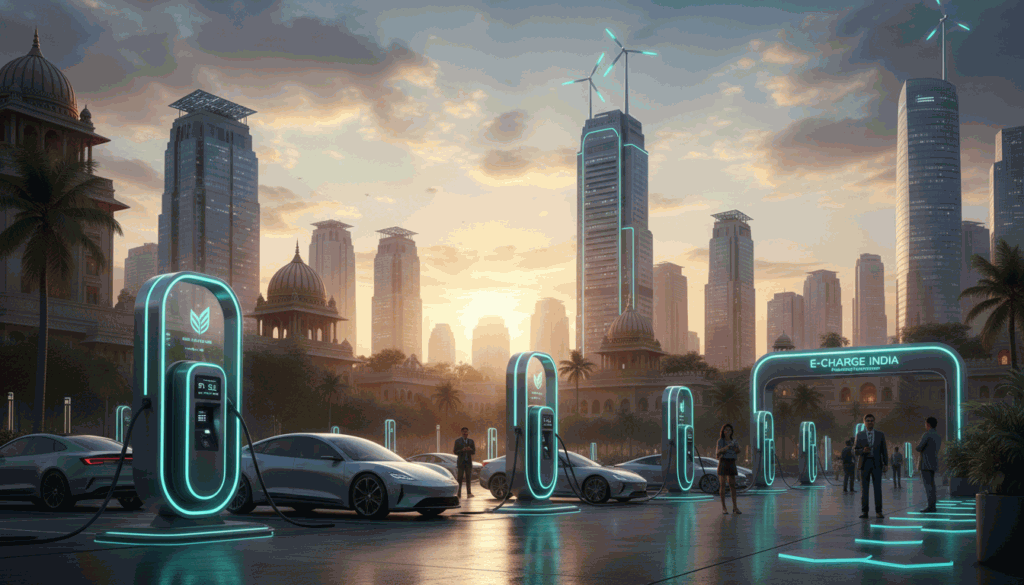
The Indian automotive landscape is undergoing a monumental shift. Spurred by rising fuel costs, growing environmental concerns, and strict emission norms, consumers are pivoting toward electric vehicles at an unprecedented rate. However, the true backbone of this EV revolution isn’t just the manufacturing of cars and scooters; it is the establishment of a robust charging network. Without adequate charging stations, range anxiety remains a massive hurdle for potential EV buyers. Recognizing this, both the public and private sectors are heavily investing in charging infrastructure. The market is highly under-penetrated, meaning early adopters who set up an EV charging franchise in India today are positioning themselves for exponential long-term gains.
Furthermore, the government’s FAME II (Faster Adoption and Manufacturing of Hybrid and Electric Vehicles) scheme has allocated substantial budgets not just for vehicle subsidies, but specifically for establishing thousands of charging stations across national highways and major cities. States are also rolling out their own bespoke EV policies, offering capital subsidies, tax exemptions, and discounted electricity tariffs for EV charging businesses. This top-down support drastically reduces the financial friction of starting an EV franchise.
Projected Growth of EV Market and Charging Infrastructure in India
| Year | Estimated EV Sales (Units) | Projected Charging Stations Needed |
|---|---|---|
| 2023 | 1.5 Million | 15,000+ |
| 2024 | 2.2 Million | 25,000+ |
| 2025 | 3.5 Million | 40,000+ |
| 2026 | 5.0 Million | 60,000+ |
| 2027 | 7.5 Million | 85,000+ |
| 2028 | 10.0 Million | 120,000+ |
Government Subsidies and Favorable Policies
To encourage private participation, the Ministry of Power has delicensed the setting up of EV charging stations. This means any individual or entity is free to set up public charging stations without requiring a specific license under the Electricity Act, provided they meet the technical, safety, and performance standards laid down by the ministry. Additionally, many state governments offer up to 25% capital subsidy on the equipment cost for the first few hundred charging stations established in their jurisdiction. Understanding these local policies is vital for minimizing your initial capital expenditure and accelerating your break-even point.
Important Note
FAME II Scheme Benefits
Under the FAME II policy, the central government has allocated over ₹1,000 crores exclusively for charging infrastructure development. Franchise owners can leverage partnered brands that are empaneled under this scheme to receive indirect subsidies and faster grid sanctions.
Why Choose the Franchise Model over an Independent Setup?
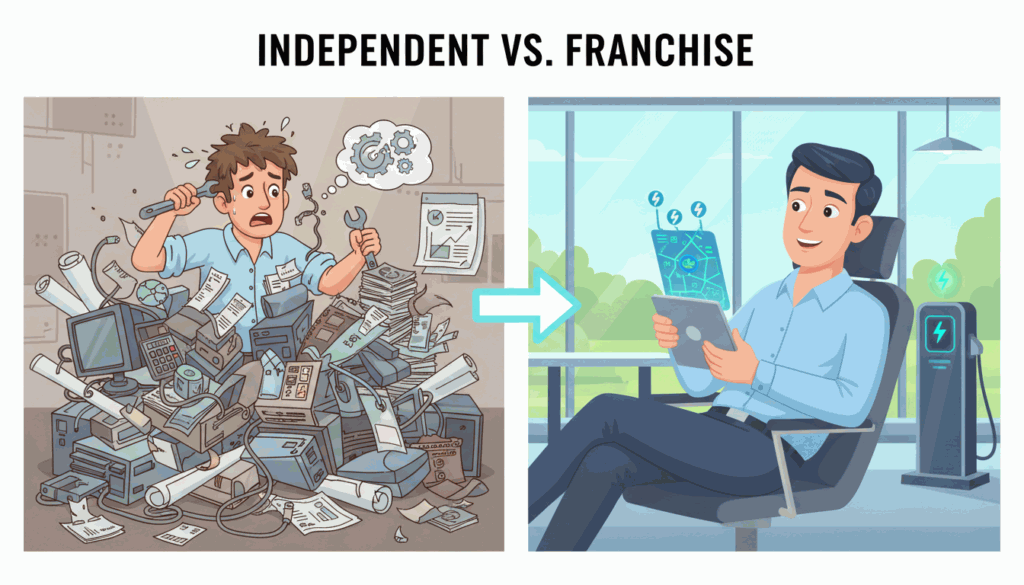
When contemplating how to start an EV charging business, one of the first major decisions is whether to build your own independent brand from scratch or invest in a reputable franchise. While an independent setup offers complete autonomy, it comes with immense challenges: sourcing highly specialized hardware, developing a proprietary mobile application for users to locate chargers and process payments, navigating complex compliance protocols, and building brand trust from zero. For most entrepreneurs, these hurdles represent a significant barrier to entry in terms of both capital and time.
pting for an EV charging franchise in India mitigates almost all of these risks. Franchisors provide a ‘plug-and-play’ business model. They supply the charging hardware (which often comes with robust warranties and maintenance AMCs), pre-integrated software solutions (including mobile apps and backend dashboard management), and national brand recognition that naturally drives EV drivers to your location. Moreover, established franchisors have dedicated liaison teams that assist in acquiring the necessary power load sanctions from local electricity boards, saving you months of bureaucratic delays.
Comparison: Franchise Model vs. Independent EV Station
| Business Feature | Franchise Model | Independent Setup |
|---|---|---|
| Brand Recognition | High (Leverages established trust) | Low (Needs to be built from scratch) |
| Initial Setup Support | Comprehensive (Hardware, Software, Grid) | Self-managed entirely by the owner |
| Equipment Sourcing | Provided and vetted by the Franchisor | Requires independent research and imports |
| Marketing & App Eco-system | Included in national apps (e.g., Tata EZ) | Custom app development required |
| Maintenance & Support | Covered under Annual Maintenance Contracts | Owner must hire third-party technicians |
| Overall Risk Factor | Relatively Low to Moderate | High risk of technological obsolescence |
High ROI and Passive Income Potential
A well-located EV charging franchise essentially operates as an automated retail business. Once the infrastructure is laid down and commissioned, the day-to-day operations require minimal human intervention. Customers pull up, authenticate via an app, charge their vehicles, and payments are automatically deducted and routed to your account based on the revenue-sharing agreement. Because operational costs (mainly rent and electricity) are relatively fixed, the profit margins scale beautifully as utilization rates increase. Strategic locations near highways, shopping malls, IT parks, and residential complexes can yield a Return on Investment (ROI) within 18 to 36 months.
Pro Tip
Location is Everything
The success of your franchise heavily depends on visibility and dwell time. Ideal locations include highway food courts, shopping malls, and multiplexes where drivers naturally spend 45-60 minutes, perfect for a fast-charging session.
Step-by-Step Guide to Launching Your EV Franchise
Now that we have established the ‘why’, let’s dive into the ‘how’. Starting an EV charging franchise in India requires a systematic approach. The process can be broadly divided into site selection, franchise partnership, regulatory approvals, and infrastructure deployment. Following these steps diligently will ensure a smooth launch and protect your investment against unforeseen regulatory roadblocks.
Step 1: Site Selection and Feasibility.
The very first step is securing a piece of land. Franchisors typically look for clear spaces measuring between 100 to 500 sq. ft., depending on the number of charging guns you wish to install. The land should have easy ingress and egress for vehicles. Once you have a site (owned or leased), a feasibility study must be conducted to check if the local electrical grid can support high-tension (HT) or low-tension (LT) commercial power lines required for EV chargers.
Step 2: Partnering with a Franchisor.Once your site is validated, you evaluate different franchise providers based on their investment criteria, profit-sharing models, and hardware reliability. After signing the Memorandum of Understanding (MoU) and paying the initial franchise fee, the brand will typically take over the site planning and layout design.
Step 3: Power Approvals and Civil Work.You will need to apply for a new commercial EV electricity connection from your state’s electricity distribution company (DISCOM). Thanks to national policies, EV connections often get preferential tariff rates. Concurrently, you will execute minor civil works—such as laying concrete foundations for the chargers, constructing a shed (optional but recommended), and installing safety bollards.
Estimated Cost Breakdown for a Standard EV Franchise
| Expense Category | Estimated Cost Range (INR) | Frequency / Notes |
|---|---|---|
| Franchise / Brand Fee | ₹1,00,000 – ₹5,00,000 | One-time upfront fee |
| Land Lease or Rent | ₹15,000 – ₹50,000 | Monthly (varies by city/location) |
| Equipment (AC/DC Chargers) | ₹2,50,000 – ₹15,00,000 | One-time (Dependent on kW capacity) |
| Infrastructure & Civil Work | ₹1,00,000 – ₹3,00,000 | One-time (Cabling, Shed, Paint, Bollards) |
| Grid Upgradation / Transformer | ₹50,000 – ₹2,50,000 | One-time (Paid to local DISCOM) |
| Software & App Maintenance | ₹5,000 – ₹20,000 | Annually (Usually deducted from revenue) |
Understanding the Capital Requirements
The cost of setting up an EV charging franchise varies wildly based on the type of chargers installed. AC slow chargers (ideal for two-wheelers and office parking lots) are inexpensive, often costing less than ₹1 Lakh per unit. Conversely, DC fast chargers (essential for highways and commercial cabs) range from ₹5 Lakhs to ₹15 Lakhs depending on the kilowatt (kW) output. A standard mixed-use station usually requires an initial capital of ₹10 Lakhs to ₹30 Lakhs, which covers the franchise fee, equipment, civil work, and grid up-gradation.
Warning
Grid Sanction Delays
Acquiring a high-load power connection from local DISCOMs can take anywhere from 30 to 90 days. Always initiate the electrical approval process immediately after finalizing your land and franchise agreement to avoid business delays.
Choosing the Best EV Charging Franchise Partner
India’s EV charging sector is currently highly competitive, with numerous players vying for market dominance. Choosing the right partner is arguably the most critical decision in your business journey. You must evaluate franchisors not just on their initial costs, but on their technological robustness, customer service, revenue-sharing models, and market reputation. Some franchisors operate on a Fixed Income model, where they rent your land and pay you a fixed monthly sum, while others operate on a Revenue Sharing model, where you bear the capital expenditure but earn a significant percentage (often 70-80%) of the charging revenue.
Key players like Tata Power EV, ChargeZone, Statiq, and Ather Grid have established themselves as industry leaders. Tata Power, for instance, has an immense network and unmatched brand trust, making it a premium choice for high-investment, high-traffic locations. Companies like Kazam and Volttic offer highly accessible, low-capital entry points focusing heavily on destination charging, such as residential societies and small retail parking lots. Ensure you request comprehensive pitch decks from multiple providers, scrutinizing the fine print regarding hardware warranties, software uptime guarantees, and the dispute resolution process for failed charging sessions.
Top EV Charging Franchise Providers in India (Estimates)
| Company Name | Min. Investment Range | Target Location / Key Requirement |
|---|---|---|
| Tata Power EZ Charge | ₹15 Lakhs – ₹40 Lakhs | High-traffic highways and prime city land |
| ChargeZone | ₹10 Lakhs – ₹25 Lakhs | B2B fleets, Highway plazas, Commercial spaces |
| Statiq | ₹12 Lakhs – ₹30 Lakhs | Malls, Office complexes, Premium real estate |
| Volttic | ₹5 Lakhs – ₹15 Lakhs | Residential setups, requiring min 2-3 parking slots |
| Kazam EV | ₹1 Lakh – ₹5 Lakhs | Retail shops, cafes, highly localized small plots |
| Ather Grid | ₹5 Lakhs – ₹10 Lakhs | Urban cafes, tech parks, two-wheeler focused areas |
Evaluating the Software Ecosystem
Hardware is only half the battle. The user experience is dictated by the franchise’s software ecosystem. EV drivers rely completely on mobile applications to locate your station, check real-time availability of chargers, monitor charging progress, and process payments via digital wallets or UPI. A franchisor with a buggy app or frequent server downtimes will lead to poor reviews on platforms like PlugShare, which will instantly kill your station’s footfall. Always test the franchisor’s app yourself before signing any contracts.
Success Strategy
Revenue Sharing vs. Fixed Rental
If you are in a prime location with high daily EV traffic, opt for the Revenue Sharing model to maximize profits. If your location is newly developing, a Fixed Rental model mitigates your risk while ensuring steady monthly income.
Conclusion
Starting an EV charging franchise in India is not merely a business venture; it is a strategic step into the future of sustainable mobility. The transition away from fossil fuels is accelerating, supported by robust government policies, evolving consumer preferences, and dramatic improvements in battery technologies. By thoroughly understanding the market landscape, analyzing your financial capacities, securing a prime location, and partnering with an established, tech-forward franchisor, you can build a highly profitable, semi-passive income stream. While the initial setup requires capital and bureaucratic navigation regarding grid connections, the long-term operational ease and growing demand make it a stellar opportunity. Take the leap today, contribute to India’s green energy revolution, and secure your place in the multi-billion-dollar electric vehicle ecosystem.
Frequently Asked Questions
How much does it cost to start an EV charging franchise in India?
The cost varies significantly based on the type of chargers and franchisor. A basic setup with AC chargers can cost between ₹1 Lakh to ₹5 Lakhs. A commercial setup with DC fast chargers typically ranges from ₹10 Lakhs to ₹30 Lakhs, encompassing equipment, franchise fees, civil work, and electrical grid upgrades.
Do I need government approval to set up an EV charging station?
Under current Ministry of Power guidelines, setting up a public EV charging station has been delicensed. You do not need a special license to operate. However, you do require standard commercial clearances, approval from your local electricity distribution company (DISCOM) for the power load, and adherence to safety protocols.
Is an EV charging franchise profitable?
Yes, it is highly profitable if situated in a strategic location with high EV footfall. Profitability stems from the margin between the commercial electricity tariff paid to the government and the premium charging rate billed to the customer. Most operators achieve a full return on investment (ROI) within 24 to 36 months.
How much space is required for an EV charging station?
A minimum of 100 to 150 square feet is required for a small setup (1-2 cars). For a standard highway or commercial station hosting 4-5 fast chargers, you will need approximately 500 to 1,000 square feet of clear land with easy vehicle access and turning radius.