
The electric vehicle (EV) revolution in India is no longer a distant dream; it is an undeniable reality accelerating at breakneck speed. With the Indian government pushing for 30% EV penetration by 2030, the demand for reliable electric vehicle charging infrastructure has skyrocketed. Currently, range anxiety remains one of the most significant barriers to EV adoption, presenting a massive, untapped commercial opportunity for entrepreneurs. Starting an EV charging station franchise in India is rapidly emerging as one of the most lucrative and future-proof business models available today.
Unlike traditional petrol pumps, an EV charging station requires less physical space, boasts lower operational costs, and benefits from continuous government subsidies and favorable policies. By partnering with established franchise networks, investors can bypass the technical complexities of hardware installation and software management, leveraging the brand trust and technical support of industry leaders.
Whether you are a real estate owner looking to monetize empty commercial space, a retail business owner wanting to attract high-value customers, or an entrepreneur seeking a high-ROI green business, this comprehensive guide covers everything you need to know. We will break down the costs, explore the best franchise partners, analyze the profitability, and provide a step-by-step roadmap to successfully launching your very own EV charging station franchise in India.
- 1. Why Invest in an EV Charging Station Franchise Now?
- Government Subsidies and Support
- 2. Understanding EV Charger Types and Technologies
- Choosing the Right Charger Mix
- 3. Cost Breakdown and Profitability Analysis
- Understanding the Franchise Revenue Models
- 4. Top EV Charging Franchise Companies in India
- Evaluating the Software Ecosystem
- 5. Step-by-Step Process to Start Your Franchise
- Marketing Your New EV Station
- Conclusion
1. Why Invest in an EV Charging Station Franchise Now?
India’s transition to electric mobility is supported by aggressive policy frameworks and shifting consumer preferences. Major automakers are releasing affordable EV models, causing EV sales to double year-over-year. However, the charging infrastructure is struggling to keep pace. As of recent data, India has a disproportionate EV-to-charger ratio compared to global standards. This gap between supply and demand is exactly where the franchise business model shines.
Investing in a franchise minimizes your risk. Independent setups require sourcing hardware, integrating complex backend software, and navigating endless regulatory approvals. A franchise offers a ‘plug-and-play’ solution. You get standardized, tested equipment, pre-built mobile app integration for user payments, and 24/7 technical support. Furthermore, foot traffic generated by EV chargers can heavily boost auxiliary businesses like cafes, retail stores, or restaurants located on the same premises. This cross-selling potential significantly increases your overall return on investment (ROI).
India EV Market Growth Indicators
| Market Indicator | Current State (Approx.) | Projected 2030 State |
|---|---|---|
| Total EVs on Road | Over 3 Million | 50 Million+ |
| Public Charging Stations | ~12,000 | ~400,000 |
| Annual Market Growth Rate | 45% YoY | Expected 60%+ CAGR |
Government Subsidies and Support
The Indian government has delicensed the EV charging business, meaning any individual can set up a public charging station without requiring a specific license, provided they meet technical standards set by the Ministry of Power. Schemes like FAME II and various state-level EV policies offer substantial capital subsidies, discounted electricity tariffs, and tax benefits to charging station operators.
Expert Tip
Capitalize on ‘Destination Charging’
Don’t just look at highways. Placing chargers at ‘destinations’ like malls, multiplexes, and office parks where people spend 2-3 hours naturally ensures higher utilization rates without the user feeling like they are waiting.
2. Understanding EV Charger Types and Technologies
Before reaching out to a franchise company, it is crucial to understand the types of chargers you can install. The profitability and target audience of your charging station depend entirely on the speed and compatibility of your hardware. Chargers are broadly categorized into Alternating Current (AC) slow/fast chargers and Direct Current (DC) fast chargers.
AC Chargers are affordable and typically installed in residential areas, offices, and hotels where vehicles are parked for longer durations (4-8 hours). They draw power directly from the grid and use the car’s onboard converter.
DC Fast Chargers, on the other hand, bypass the onboard converter to deliver power directly to the battery. These are expensive, require significant grid upgrades, but can charge an EV from 10% to 80% in under 45 minutes. These are highly profitable on highways and busy urban transit corridors. A successful franchise usually combines both, or selects the specific type that best matches the location’s dwell time.
Charger Types and Applications
| Charger Level | Charging Speed | Best Suited Location |
|---|---|---|
| Level 1 (AC Slow – 3.3kW) | 8-12 Hours | Residential complexes, Long-term parking |
| Level 2 (AC Fast – 7.4 to 22kW) | 3-6 Hours | Malls, Office IT Parks, Hotels |
| Level 3 (DC Fast – 30kW to 150kW+) | 30-60 Minutes | Highways, Fuel stations, Busy urban hubs |
Choosing the Right Charger Mix
If you are opening a highway rest-stop franchise, DC Fast Chargers (CCS2 standard) are mandatory, as travelers want to charge and leave quickly. Conversely, if your franchise is in a tier-2 city shopping complex, multiple 22kW Type 2 AC chargers will serve you better, allowing multiple users to charge simultaneously at a lower setup cost.
Comparison
AC vs. DC Charging Stations
AC chargers are low-cost (INR 50,000 – 1.5 Lakhs) but have slow turnaround times. DC Fast Chargers are high-cost (INR 8 Lakhs – 20 Lakhs) but offer high-speed charging, attracting premium commercial traffic.
3. Cost Breakdown and Profitability Analysis
The most common question entrepreneurs ask is: ‘How much does it cost to start an EV charging franchise, and what is the ROI?’ The initial investment can vary drastically based on the land cost, the number of chargers, and the power capacity required. Assuming you already own or lease the land, your primary costs will be the franchise fee (if applicable), hardware, civil work, grid connection, and software integration.
Operating expenses include electricity tariffs, internet connectivity, maintenance, and manpower (though many modern stations are fully unmanned and automated). Revenue is generated through the margin between your commercial electricity procurement cost and the per-unit (kWh) price charged to the consumer. Additionally, franchises make money through idle fees (charging users who leave their cars plugged in after charging is complete) and advertising on the charger’s digital screens.
With a utilization rate of just 20-30%, an average mid-sized charging station can break even within 3 to 4 years, offering massive long-term profitability. Once the capital expenditure is recovered, the gross margins on electricity resale and footfall monetization are exceptionally high.
Estimated Setup Cost Breakdown (Mid-Sized Station)
| Expense Category | Estimated Cost (INR) | Remarks |
|---|---|---|
| Hardware (1 DC 50kW + 2 AC 22kW) | ₹ 12,00,000 – ₹ 15,00,000 | Major capital expense |
| Electrical Infrastructure & Transformer | ₹ 4,00,000 – ₹ 8,00,000 | Depends on state electricity board |
| Civil Work, Branding & Software Setup | ₹ 2,00,000 – ₹ 4,00,000 | Canothing, painting, app setup |
Understanding the Franchise Revenue Models
Franchisors typically offer two models: COCO (Company Owned, Company Operated) and FOFO (Franchise Owned, Franchise Operated). In the FOFO model, you bear the capital expenditure, while the franchisor takes a small percentage (usually 5-10%) of the revenue for software and brand licensing. In some hybrid models, the company provides the charger for free, but requires you to provide premium real estate and share a larger chunk of the profits.
Pros/ Cons
Franchise Operated Model (FOFO)
Pros: Total control over the physical asset, higher share of the profits, localized marketing control. Cons: Requires higher upfront capital investment, owner bears the risk of low utilization in the initial months.
4. Top EV Charging Franchise Companies in India
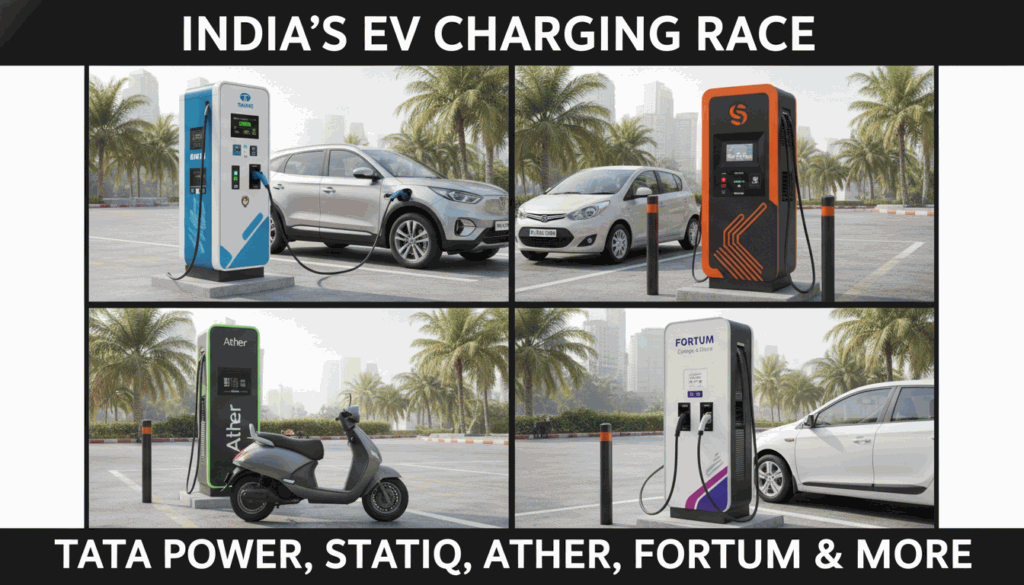
Choosing the right franchise partner is the most critical decision in your journey. You need a partner with a robust backend mobile app, excellent uptime (reliability of chargers), and strong brand visibility. When EV drivers search for a charger on their maps, they usually filter by familiar, reliable networks to avoid arriving at a broken or non-functional charger.
Several giants dominate the Indian market. Tata Power is the undisputed leader, boasting an extensive network and high brand trust. ChargeZone is highly aggressive in the B2B and highway transit space. Zeon Charging has built a phenomenal reputation in South India for unparalleled reliability. Other notable players include Volttic, Statiq, and Kazam. Each of these companies offers unique franchise packages. Some focus heavily on software, allowing you to buy any hardware, while others offer a strict, unified ecosystem where they provide the proprietary hardware, software, and branding.
When evaluating a partner, inquire about their Central Management System (CMS), their customer support response time, and how they handle hardware warranties. A cheap franchisor might save you money upfront, but frequent hardware breakdowns will destroy your station’s reputation among local EV drivers.
Top Franchise Options in India
| Company Name | Primary Focus Area | Key Franchise Benefit |
|---|---|---|
| Tata Power EZ Charge | Pan-India, All Sectors | Massive brand trust and largest user base |
| ChargeZone | Highways & Commercial Fleets | Excellent fast-charging infrastructure |
| Statiq | Urban hubs & residential | Highly flexible and affordable setups |
Evaluating the Software Ecosystem
Hardware is only half the battle. The user experience relies on the mobile app. Check the franchisor’s app on the Google Play Store. Does it accurately show real-time charger availability? Is the payment gateway smooth? Can users start and stop charging remotely? A clunky app will drive customers to your competitors.
Warning/ Alert
Beware of Hidden Fees
Always read the fine print in franchise agreements. Look out for hidden Annual Maintenance Contract (AMC) hikes, mandatory hardware upgrade clauses, and exactly how the revenue split is calculated (gross vs. net).
5. Step-by-Step Process to Start Your Franchise
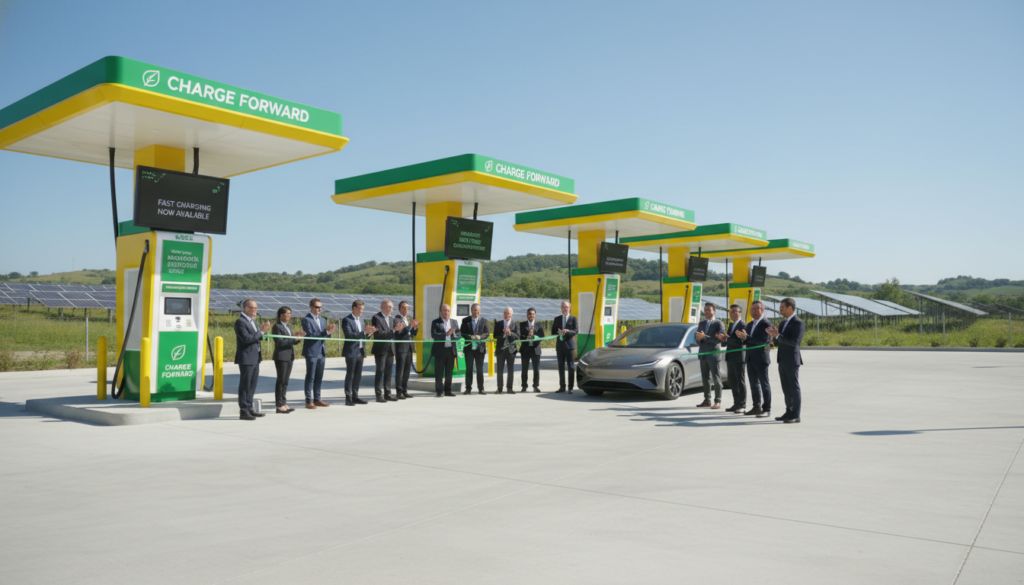
Starting your EV charging franchise involves a systematic approach to ensure compliance, safety, and business viability. The very first step is Site Selection. The location must have easy ingress and egress for vehicles, ample parking space, and close proximity to an electrical substation to minimize cabling costs. Once a site is finalized, conduct a feasibility study with your chosen franchisor to determine the power load requirements.
The next crucial step is securing a new electricity connection. Under current Indian regulations, you can apply for a separate commercial EV charging meter, which often features lower tariffs compared to standard commercial rates. You will need to submit property documents, a NOC (No Objection Certificate) from the local municipality or fire department, and the technical layout of the station to your state electricity board (DISCOM).
After power is sanctioned, the civil work begins. This includes laying concrete foundations for the chargers, installing canopies to protect the equipment from rain and sun, and setting up clear signage. Once the physical setup is complete, the franchisor’s technical team will install the chargers, connect them to the grid, and integrate them with their Central Management System (CMS) via IoT SIM cards. Finally, a thorough safety inspection is conducted before the station is made ‘Live’ on the public app.
Marketing Your New EV Station
Even though your station will appear on the franchisor’s app, local marketing is vital. Ensure your station is listed on Google My Business, PlugShare, and Tata Nexon EV community forums. Offering inaugural discounts or partnering with local cafes for cross-promotions can rapidly build a loyal customer base.
Pro Tip
Future-Proof Your Power Sanction
When applying for your electrical load from the DISCOM, apply for 20-30% more capacity than you currently need. As your business grows and you want to add more chargers, getting a load extension later is a tedious and time-consuming process.
Conclusion
Starting an EV charging station franchise in India is one of the most exciting and socially responsible business opportunities of this decade. As the automotive industry pivots aggressively towards sustainable mobility, the first movers in the charging infrastructure space will reap the highest rewards. While the initial capital investment and regulatory paperwork may seem daunting, partnering with a reputed franchise company drastically simplifies the process, mitigating technical risks and providing immediate brand recognition.
By carefully selecting a strategic location, choosing the optimal mix of AC and DC chargers, and maintaining high uptime, you can build a highly profitable passive income stream. The green revolution is here, and investing in an EV charging franchise is your ticket to being at the forefront of India’s clean energy future. Take the leap, do your localized research, connect with top franchisors, and power the future of transportation.
Frequently Asked Questions
Do I need a special license to open an EV charging station in India?
No, the Ministry of Power has delicensed the EV charging business. Any individual or entity can set up a public charging station provided they meet the technical, safety, and performance standards set by the government.
How much space is required for an EV charging station franchise?
The space depends on the number of chargers. A minimal setup with one DC fast charger and one AC charger requires parking space for 2-3 cars, translating to roughly 300 to 500 square feet, including space for the transformer and equipment.
What is the average profit margin for an EV charging station?
Profit margins typically range from 15% to 30%. You earn the difference between the commercial electricity tariff you pay to the grid and the per-unit (kWh) rate you charge the consumer, minus operational costs.
Can I install solar panels to power my EV charging station?
Yes, combining solar energy with your EV charging station is highly encouraged and can further reduce your electricity procurement costs over time, though it requires a significantly higher upfront investment for the solar array and battery storage.
Which company gives the best EV franchise in India?
There is no single ‘best’ company, as it depends on your location and budget. Tata Power is great for overall brand trust, ChargeZone is excellent for highways, and Statiq or Kazam are great for cost-effective urban setups.